
A primary school in London is accused of religious discrimination after a pupil was allegedly challenged for wearing a tilak. The school denies the allegations, citing its inclusive environment and existing policy.

Union Education Minister Dharmendra Pradhan advocates for the establishment of 'Mahakal Standard Time' based on Ujjain's historical significance in time calculation, challenging the dominance of Greenwich Mean Time.
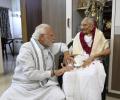
Who were the mothers who shaped Mahatma Gandhi, Sachin Tendulkar, Narendra Modi and other well-known Indians?

Opposition parties are demanding the resignation of Maharashtra State Women's Commission chairperson Rupali Chakankar due to her alleged connections with a self-proclaimed numerologist, Ashok Kharat, who has been arrested for rape and exploitation.

As Vijay prepares for his next innings as chief minister of Tamil Nadu, he would do well to learn from the life lessons of NTR.

Prime Minister Narendra Modi has called on the people of Karnataka to commit to nine pledges focused on sustainability, health, and local empowerment to drive development in the state and across India.

A controversy has erupted in Bengaluru after five Brahmin students were allegedly forced to remove their sacred thread at Krupanidhi College during the Common Entrance Test (CET). Students claim invigilators demanded the removal of the sacred thread despite previous government assurances that it would not be required.

When Bangalore-based Arjun* agreed to an arranged marriage, he believed he had found the perfect balance between tradition and modernity. But a quiet conflict over religion at home soon began to test the relationship.

'No one can wipe-off our glorious collaboration in The Kerala Story and Bastar, from Indian cinema.' 'When we create history and are scrutiniSed in public, we must be extremely responsible in our behaviour and conduct.'

Thousands of Naga students and citizens rallied in Kohima, Nagaland, opposing the central government's directive to mandate the singing of Vande Mataram in official functions and educational institutions, citing concerns over secularism and religious freedom.

The Maha Vikas Aghadi (MVA) alliance in Maharashtra is facing internal conflict over the allocation of a winnable Rajya Sabha seat, with the Congress staking its claim against the Shiv Sena (UBT). Discussions are ongoing to reach a consensus before the nomination deadline.

'The real fault line in Assam is not Hindu versus Muslim. It is Assamese versus Bengali -- and within that, the specific anxiety about undocumented Bangladeshi settlers claiming land and altering the demographic balance of the state.'

The Bombay High Court has criticised the Foreigners Regional Registration Office (FRRO) for failing to process the exit permit of a US national facing religious conversion charges, despite a court order allowing him to travel.

A court in Maharashtra's Nashik district on Thursday remanded self-styled godman Ashok Kharat to seven-day police custody in a second rape case where he is accused of sexually exploiting a woman on multiple occasions since 2020 under the guise of religious rituals.

The Supreme Court of India has ruled that individuals converting from Hinduism, Sikhism, or Buddhism cannot retain Scheduled Caste status, reinforcing existing constitutional provisions.

The three principles he taught in particular -- Ahimsa, Anekantavada and Aparigraha -- are as alive and necessary today as they were then. Perhaps more so.

Naming an airport after Guru Ravidas is not just about a name, it shows that Dalit communities want respect, equal treatment, and freedom from unfair caste rules in religion and society.

The complainant stated that Ranveer Singh, while present on stage and in the presence of the lead actor of Kantara: Chapter-1, allegedly performed acts that mocked and insulted the sacred Bhoota Kola tradition practiced in coastal Karnataka.

The core issues to be settled -- access to Hormuz, Israel's aggression in Lebanon, the question of Iran's nuclear programme, sanctions relief and compensation -- are thorny enough to require weeks of patient negotiation. The most likely outcome of the opening sessions is that both sides take the measure of each other, establish what is and is not negotiable, and return home without having broken anything. That would count as progress.

The United States on Friday issued a 'security alert' for its citizens in Bangladesh, asking them to remain vigilant and avoid crowds as political violence or extremist attacks may occur, potentially targeting rallies, polling stations, and religious sites during the election period.
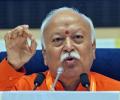
RSS chief Mohan Bhagwat emphasized the need for Hindu unity, vigilance, and social harmony, advocating for family values and addressing concerns about infiltration and social divisions.

The Supreme Court refused to stay a provision barring the declaration of tribal lands as waqf properties, upholding key provisions of the Amended Waqf Act.

Sheikh Hasina, Bangladesh's deposed prime minister, has accused the interim government led by Muhammad Yunus of committing atrocities against non-Muslims and interfering with religious freedom.

According to the proceedings of the case, the complainant has alleged that the "Indian Railways serves only halal-processed meat in non-vegetarian meals, which creates unfair discrimination and causes human-rights violations".

The future of India will be shaped and decided by the choices the RSS makes now, argues Colonel Anil A Athale (retd).

The Supreme Court on Friday dismissed a plea challenging the Karnataka government's decision to invite International Booker Prize winner Banu Mushtaq to inaugurate Mysuru Dasara this year.
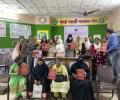
'Every issue that Muslims are facing today affects Muslim women. But how come women's issues don't affect the community?' 'How does the community benefit by the practice of halala or polygamy?'

Hindus will offer prayers from sunrise to sunset on Basant Panchami while Muslims to offer namaz from 1 pm to 3 pm on Friday.

An FIR has been filed against actors Sunny Deol, Randeep Hooda and three others following a complaint that a scene in the movie 'Jaat' has "hurt sentiments" of the Christian community. The complaint filed by a Christian community leader has alleged the movie, which was released on April 10, contains scenes that disrespect Jesus Christ and Christian religious practices.

Madhya Pradesh Minister and Bharatiya Janata Party leader Inder Singh Parmar has sparked controversy by saying that social reformer Raja Ram Mohan Roy was a 'British agent' who started a 'vicious cycle of religious conversion', prompting the Trinamool Congress to call the remarks an insult to Bengal.

Razvi continued, urging young Muslim people to avoid participating in New Year celebrations, stressing that Muslims should instead focus on religious practices that align with their faith.

The court asked the state government, forest department and Kaziranga National Park authorities to place on record the steps taken so far to control illegal fishing and to explain how such activities can be effectively prevented in future.

'What has changed is that the new regulations are backed by a clear enforcement framework. They have real consequences and, for the first time, make compliance unavoidable.'

The BMC's decision to ban public feeding of pigeons in view of health hazards associated with the practice and close kabutarkhanas has led to a controversy. People who feed pigeons have challenged the civic body's decision in the Bombay high court.
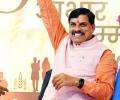
Madhya Pradesh Chief Minister Mohan Yadav has announced that his government will introduce a provision for the death penalty for religious conversion of girls, mirroring the punishment for rape of minors. This announcement was made at a Women's Day event in Bhopal, where the CM also digitally transferred financial assistance to beneficiaries of various schemes. Yadav stated that the government is committed to protecting and respecting women and will take strict action against those involved in illegal conversions.

The Supreme Court delivered a split verdict on a plea by the Maharashtra government seeking a review of the court's earlier direction to form a special investigation team (SIT) with Hindu and Muslim officers to investigate the 2023 Akola communal riots. Justice Sanjay Kumar refused to review the direction, while Justice Satish Chandra Sharma agreed to hear the review plea in open court.

An American Hindu organisation has asked Vice President J D Vance to engage with Hinduism after he said that his wife, Usha, encouraged him "to re-engage with his faith." The request comes after Vance faced criticism over comments regarding his interfaith marriage.

Astrologer Chirag Daruwalla, who is following in the footsteps of his famed astrologer father, the late Bejan Daruwalla, helps you navigate the Naya Saal.
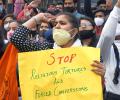
The Chhattisgarh high court has disposed of two petitions seeking the removal of hoardings prohibiting entry to pastors and 'converted Christians' in eight villages, holding that they were installed to prevent forced conversions through allurement or fraudulent means and cannot be termed as unconstitutional.
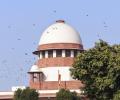
The Indian government defended the Waqf (Amendment) Act, 2025 in the Supreme Court, arguing that waqf, while an Islamic concept, is not an essential part of Islam. Solicitor General Tushar Mehta stated that waqf is essentially charity, which is recognized across religions, and cannot be considered a fundamental tenet of any faith. He also argued that the amended law addresses secular aspects of waqf and activities unrelated to Islam, and that "waqf by user" does not grant ownership of public land. Mehta highlighted the extensive consultations involved in the bill's creation, including feedback from various stakeholders. The hearing will continue on Thursday.
